
Introduction
Education is the foundation of human progress. From the very first day of school to the final stage of higher education, study remains a constant companion in life. However, most students face a common challenge—how to study effectively. Many learners spend hours with their books but still fail to achieve good results. The problem is not always in their effort, but in their methods. Effective studying is not about sitting with books for long hours, it is about applying smart strategies. This article explores the most practical study tips and tricks that every student can follow to enhance learning and secure better results. We will also discuss how habits like note-making, time management, presentation, and revision can transform the way students learn.
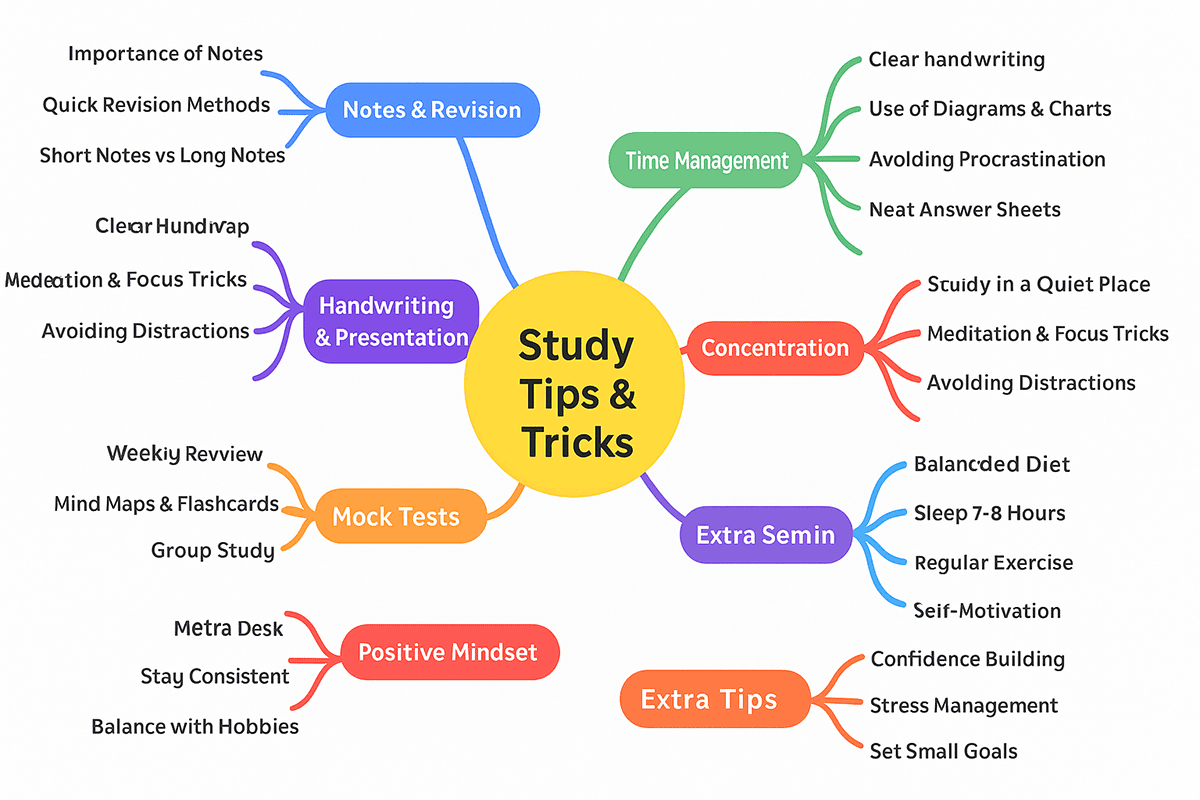
Making Notes & Revision
One of the golden rules of studying is making notes. A textbook is usually lengthy, and it is impossible to remember every line. However, when students prepare short, organized notes, they create a personalized version of the textbook in their own words. This not only saves time during revision but also makes concepts easier to understand. Writing while learning improves memory retention because the brain remembers more when multiple senses are engaged. Notes are especially useful during exam season when time is limited. Instead of reading hundreds of pages, a student can revise all key points from a few pages of notes.
Benefits of Notes
– Helps in quick revision
– Improves long-term memory
– Organizes learning systematically
– Reduces stress before exams
– Builds confidence
Table: Notes vs Direct Reading
| Aspect | Direct Reading | Reading with Notes |
| Time Required | Very high | Much less |
| Memory Retention | Low | High |
| Revision | Difficult | Quick and easy |
| Confidence | Often low | Much higher |
Time Management
Time is one of the most valuable assets in a student’s life. Managing it wisely is the secret to success. A student who studies for just three hours a day with focus can often achieve more than someone who spends the entire day without proper planning. Creating a timetable allows students to allocate specific time for each subject, ensuring balanced preparation. The key is to divide time according to difficulty level—subjects that are harder should get more time, while easier ones can be revised quickly. Students should also keep time for rest, hobbies, and sleep, as a balanced lifestyle improves concentration. Some popular methods include the Pomodoro technique (study for 25 minutes, take a 5-minute break) and the 2-hour focused session method. The goal is not just to work hard, but to work smart.
Sample Time Table
Here is an example of a simple study plan:
| Time | Activity | Purpose |
| 6:00 AM – 7:00 AM | Wake up & light exercise | Boosts energy |
| 7:30 AM – 9:00 AM | Study difficult subject | High focus in morning |
| 9:30 AM – 11:00 AM | Study 2nd subject | Balanced learning |
| 11:00 AM – 12:00 PM | Revision of notes | Retention |
| 2:00 PM – 4:00 PM | Mock tests/practice | Application of knowledge |
| 6:00 PM – 7:00 PM | Review mistakes | Improves accuracy |
| 8:00 PM – 9:00 PM | Easy subject / reading | Relaxed study |
Handwriting & Presentation
Exams are not just about knowledge; they are also about how you present it. A well-structured, neat answer sheet leaves a positive impression on teachers and can even lead to higher marks. Good handwriting ensures that examiners can easily read the answers without confusion. Students should also focus on underlining important points, writing in paragraphs, and keeping answers well-organized. Presentation is often the difference between an average and an excellent score.

Improving Concentration
Without concentration, even hours of study can go waste. In today’s world, distractions like mobile phones, social media, and television take away most of the productive time. Students should create a distraction-free environment by keeping their phones away while studying. Deep breathing exercises, meditation, and short breaks also help in improving focus. Techniques like the Pomodoro method encourage small bursts of study with breaks, making it easier to stay attentive for longer periods.
Importance of Revision
Learning once is never enough. Our brain tends to forget information over time. That is why revision is the backbone of strong memory. Regular revision at fixed intervals—such as after one day, one week, and one month—helps to transfer knowledge from short-term memory to long-term memory. Students should maintain a separate revision notebook or calendar to track which topics need review.
Mock Tests & Practice
Mock tests are practice exams that allow students to evaluate their preparation. By solving past papers and sample tests, students become familiar with exam patterns and time management. This practice also highlights weak areas that need extra attention. Mock tests reduce exam fear and improve writing speed, both of which are critical during real exams.
Health & Rest
A healthy mind lives in a healthy body. Students often compromise on sleep and nutrition, believing that studying longer hours will lead to better results. In reality, lack of sleep reduces concentration and memory power. Balanced meals, exercise, and proper rest are essential for an active brain. Even a short 20-minute nap can refresh the brain and boost performance.
Creating a Study Environment
The place of study plays an important role in learning. A clean desk, good lighting, and a noise-free environment increase concentration. Students should avoid studying on the bed, as it often leads to drowsiness. A dedicated study corner builds discipline and creates a habit of learning.
Building the Right Mindset
A positive mindset can turn study from a burden into an enjoyable activity. Students should set achievable goals and reward themselves after completing tasks. Avoid negative self-talk like ‘I can’t do it,’ and replace it with ‘I will try my best.’ Confidence and consistency are key ingredients for success.
Extra Tips
– Break large tasks into small parts
– Stay consistent instead of over-studying in one day
– Use charts, diagrams, and flashcards for memory boost
– Teach someone else what you learn—it strengthens understanding
– Balance study with hobbies to avoid burnout

Conclusion
Studying is not about spending endless hours with books. It is about using smart techniques to make learning effective, enjoyable, and long-lasting. Notes, revision, time management, good presentation, health, and the right mindset are all equally important. Every student has the potential to succeed; all they need is the right strategy. In the end, success belongs not to those who study harder, but to those who study smarter.